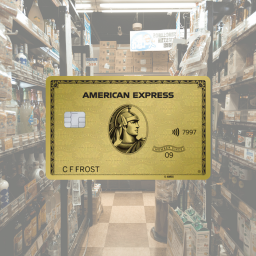
The right rewards card is the one that pays best on the spending you already do. We modelled an ordinary year — travel, dining, groceries, rent or mortgage, and everything else — against what each card actually earns. Here are our picks, ranked, with the math shown.
Our #1 Rewards Card
1
Best for premium travel
Bilt Palladium Card
$495 annual fee
2x points on everything, with premium travel perks and rewards on rent.
Welcome offer
50,000 Bilt Points
after $4,000 in everyday purchases in your first 90 days
50,000 Bilt Points + Gold Status after $4,000 in everyday purchases in 90 days, plus $300 Bilt Cash
2x Bilt Points per dollar on everyday spend
Up to 1.25x points on rent and mortgage
$400/year hotel credit via Bilt Travel + $200 Bilt Cash each January — any Bilt Cash balance over $100 expires at the end of the calendar year
A welcome bonus is a one-year question. This is the other one, and the one the order above is built on: across an ordinary year of spending, what does each card actually pay you, and what’s left after the annual fee.
We’re assuming — Mid-market renter
Travel
$250/mo
Dining
$400/mo
Groceries
$500/mo
Rent / mortgage
$2,000/mo
Everything else
$850/mo
Total
$4,000/mo
A household spending $4,000 a month, half of it on housing. Your mix is almost certainly different — the point is the shape of the answer, not the exact dollar.
Annual rewards value by spending category for each card, at the stated spending profile.
Category
A year of spend
Bilt Palladium Card
American Express Gold Card
Chase Sapphire Preferred
Travel
$3,000
2x6,000 pts
3x19,000 pts
2x26,000 pts
Dining
$4,800
2x9,600 pts
4x19,200 pts
3x14,400 pts
Groceries
$6,000
2x12,000 pts
4x324,000 pts
1x46,000 pts
Rent / mortgageOnly Bilt pays this
$24,000
1.25x530,000 pts
—6no points
—6no points
Everything else
$10,200
2x20,400 pts
1x10,200 pts
1x10,200 pts
Points a year
78,000
62,400
36,600
What they're worthat the valuations below
$1,716
$1,248
$750
Annual fee
−$495
−$325
−$95
Net, every year
$1,221
$923
$655
Why the Bilt Palladium Card wins
Its housing points aren’t free — they’re unlocked by the everyday spend you put on the card. Counted honestly, that means $24,000 of everyday spending produces all 78,000 points, including the 30,000 on rent or a mortgage. That’s an effective 7.1% back on everyday spend — before the annual fee, and on a currency valued higher than either of the other two.
There are two ways to earn it, and you pick one each month. The tiered path pays up to 1.25x on your whole housing payment, scaled by how your everyday spend compares to it. The Bilt Cash path pays 4% back on everyday spend, which converts to housing points at $30 per 1,000 — an effective 1.33 points per everyday dollar, capped at 1x your payment. You can’t run both in the same month, and which one wins depends entirely on how much you spend against what you pay for housing.
Which Bilt housing rewards path pays more, by monthly everyday spend, at a $2,000 housing payment.
Everyday spendagainst a $2,000/mo payment
Tiered path
4% Bilt Cash path
Pick
$500(25%)
12,000
8,000
Tiered
$1,000(50%)
18,000
16,000
Tiered
$1,500(75%)
24,000
24,000
Either — they tie
$2,000(100%)
30,000
29,000
Tiered
$2,500(125%)
30,000
34,000
4% Bilt Cash
$3,000(150%)
30,000
39,000
4% Bilt Cash
The tiered path is a staircase, so within a tier the extra spending buys nothing and its return per dollar falls. The Bilt Cash path is a flat 1.33x that never steps. That’s why tiered leads while your spending is at or below your housing payment — and why Bilt Cash takes over above it, once the 1.25x is pinned at its ceiling. At the spending modelled above, the tiered path wins — by about a thousand points, which is close enough that it's worth re-checking against your own numbers.
Estimates, not offers. Points are converted at the published valuations below — a ceiling from good redemptions, not a rate anyone guarantees. Annual statement credits are not netted against the fees above; they’re listed with each card. Confirm current rates and fees with the issuer.
What a point is actually worth
Every dollar figure above depends on this. The three programs aren’t valued the same, and the differences are big enough to move the ranking.
Program
On this page
Valued at
Cash-out floor
Bilt Points
Bilt Palladium Card
2.2¢
~1¢
Amex Membership Rewards
American Express Gold Card
2¢
~1¢
Chase Ultimate Rewards
Chase Sapphire Preferred
2.05¢
~1¢
Valuations per The Points Guy monthly valuations, as of UNVERIFIED — see §27-7.
A published valuation is a ceiling, not a rate. It reflects what the points are worth when you move them to an airline or hotel partner and book something that would have cost real money. That’s a skill and a time commitment, not an automatic outcome. If you take the simple route and cash out, all three currencies land near a penny — and at a penny, the gap between these cards narrows sharply and the fees start to look much larger.
Where this quietly favours Bilt. Bilt Points carry the highest valuation of the three, so the same number of points converts to more dollars. Stack that on the one category the other two pay nothing at all on — rent or a mortgage — and the gap in the table above is really two advantages compounding: more points earned, and each one worth more.
The honest way to use this: if you know you’ll transfer points to partners, the valuations above are a fair basis. If you know you won’t, run the numbers at a penny before you pay any annual fee on this page.
Then there’s year one
The welcome bonus at our stated valuation, less the annual fee you pay to hold the card. This is a one-time payment, which is why it sits below the ongoing earn rather than above it. Ongoing rewards and conditional statement credits are not counted here.
Card
Welcome bonus
Est. value
Annual fee
First-year net
Bilt Palladium Card
50,000 Bilt Points
$625
−$495
$130
Chase Sapphire Preferred
60,000 bonus points
$750
−$95
$655
American Express Gold Card
60,000 bonus points
$600
−$325
$275
Estimates, not offers. Point valuations are ours and are stated on each card below; your value depends on how you redeem. Bonus amounts, spend requirements and annual fees change — confirm current terms with the issuer.
How to run this on your own numbers
The table above assumes a spender. You aren't that spender. The method matters
more than our profile does, and it takes about ten minutes:
Pull three months of statements and total each category. Travel, dining,
groceries, rent or mortgage, everything else. Multiply by four. Don't estimate
from memory — almost everyone guesses their dining and grocery spend low.
Multiply each category by each card's rate. That's the earn matrix above.
Watch for the categories where a card's advertised rate doesn't cover how you
actually shop; those are footnoted for a reason.
Convert at a rate you'd genuinely accept. If you won't transfer points to
airline partners, use the cash-out floor, not the published valuation.
Subtract the annual fee. What's left is the only number that compares two
cards fairly.
If the winner changes when you swap our profile for yours, trust yours.
The category most cards ignore
For most households, housing is the single largest line item — larger than
travel, dining and groceries combined. Nearly every rewards card pays nothing on
it, because landlords and mortgage servicers don't take cards without a
processing fee that eats the rewards.
That's why housing is the category worth checking first. A card paying a modest
rate on your biggest expense can beat a card paying a headline rate on a small
one. Four times something small is still small.
The trade-off is that housing rewards come with mechanics attached — spending
thresholds, monthly choices, conversion rates — where a flat category bonus just
pays. Which brings us to the fine print.
If you go the housing-rewards route, pick your method
Bilt makes you choose, each month, between two ways of earning on rent or a
mortgage, and you can't run both at once:
The tiered rate scales with how much everyday spending you put on the card
relative to your housing payment. Match your housing payment in everyday spend
and you reach the top tier on the entire payment. Fall short and the rate steps
down.
The Bilt Cash route pays a percentage back on everyday spend as Bilt Cash,
which you then convert into points on your housing payment at a fixed rate.
Neither is universally better. The tiered rate is a staircase and the Bilt Cash
route is a ramp, so the ramp wins in the gaps between steps — and it wins again
once your everyday spending runs comfortably above your housing payment. If your
everyday spend is well below your rent, check the tiered option first.
The practical advice: work out your own ratio of everyday spend to housing
payment, check it once a year rather than every month, and don't let the
optimisation become a hobby that costs more attention than it returns.
What else to check before the rewards
Perks you'll actually use. Lounge access and travel protections are only
worth paying for if they fit how you travel. Annual credits that arrive in
monthly slices you have to remember to spend are worth less than their face
value — we deliberately leave them out of the figures above.
Whether the spend threshold is one you'd hit anyway. A bonus you have to
invent purchases to reach is not a bonus.
The interest rate, if you'll ever carry a balance. See below — it dwarfs
everything on this page.
Use credit responsibly
Rewards only come out ahead if you pay the balance in full every month. Card APRs
run far above what any rewards program pays back, so carrying a balance wipes out
every point and cash-back dollar on this page and then some. If you're carrying
one, paying it down beats every offer here.
Verify current terms with the issuer before you apply. Earn rates, bonus
amounts, spending requirements, annual fees and point valuations all change
frequently.
Advertising disclosure: our partners may compensate us, which can affect which offers appear and where. Offers change often — verify current rates and terms with the provider before you apply. Full advertising disclosure.